Background Patient values and preferences are important in clinical practice guideline development, but responses indicating reliance on physician judgment may be difficult to interpret. We examined whether such reliance can coexist with explicit preferences about treatment outcomes and trade-offs.
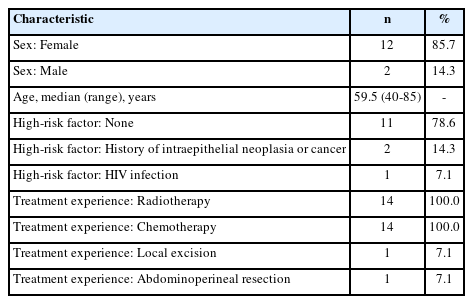
Methods We conducted an exploratory secondary analysis of a 22-item cross-sectional survey completed by 14 adults with anal cancer recruited from four hospitals during guideline development. The survey assessed decision-making participation, responses to specific clinical scenarios, rankings of six treatment goals, and treatment-acceptance thresholds. Ten scenario items included the option “I would follow my treating physician’s judgment.” Analyses were descriptive and emphasized within-participant response patterns.
Results Ten participants (71.4%) generally preferred shared decision-making, yet 11 selected physician judgment in at least one scenario. All 11 completed a full ranking of treatment goals, and 9 completed both trade-off threshold items. Among seven participants who relied on physician judgment for salvage treatment, all completed the ranking and six completed both thresholds; five required at least a 20% survival improvement to accept surgery resulting in a permanent stoma. Although permanent stoma ranked fourth among six goals overall, 11 of 13 respondents required at least a 20% survival improvement to accept such surgery.
Conclusions Reliance on physician judgment did not necessarily indicate an absence of patient preferences. Guideline-related preference studies should distinguish preferences for the decision process, general priorities among outcomes, and context-specific benefit-risk trade-offs. Responses indicating reliance on physician judgment should not automatically be treated as “no preference” or missing information.
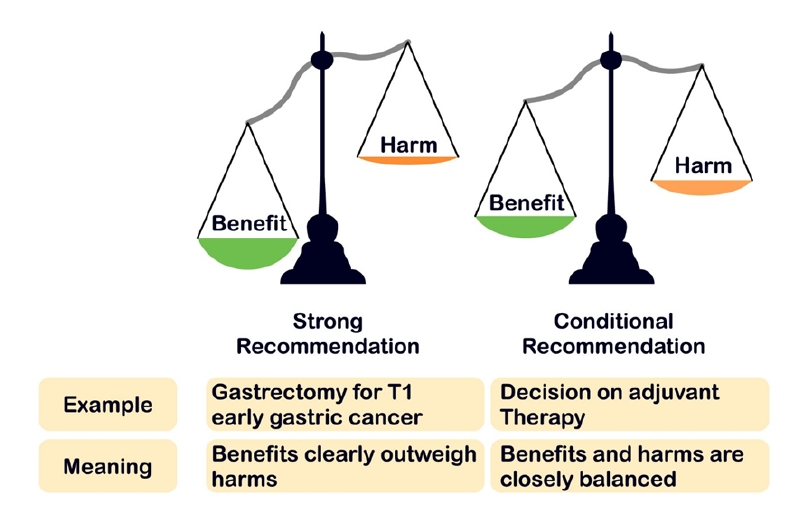
Clinical practice guidelines (CPGs) are critical for translating research into clinical practice; however, high-quality evidence alone does not ensure optimal care. The integration of patient values and preferences is essential for developing recommendations that are both relevant and applicable, yet many guidelines continue to underrepresent patient perspectives and lack transparent incorporation of preference research. This review delineates the distinction between values and preferences, examines their influence on preference-sensitive decisions, and evaluates methods for eliciting patient input, such as utility-based measurements, discrete-choice experiments, and qualitative studies. Systematic integration of this evidence through guideline development enhances both credibility and patient-centeredness. Persistent challenges include issues of representativeness, methodological uncertainty, and cultural barriers. Implementing practical strategies to address these challenges will improve transparency, relevance, and acceptance of clinical practice guidelines.



 First
First Prev
Prev